I have shared this before, but it is worth sharing again and again…
I was speaking to my class about D-Day one year. It was quiet. Almost instinctively, young people can sense the importance of that moment of history. I had finished talking, and then my assistant of 70+ years spoke of something I did not know of her family history, and I had been friends with her for more than a decade.
“My brother was there.” Well, you could have heard a pin drop at the point. What she said next was short but incredibly moving. “My brother was there on D-Day. He came home alive, but he left part of himself on that beach. He was never the same.”
This is my third article about D-Day. You can imagine this day in history holds an incredible amount of reverence for me. We must never forget where we have been and those courageous people who preceded us. While some would have us jettison our common history, there are parts of our shared history which must be remembered for the sheer audacity of courage, training, and skill required to preserve our way of life, our freedom.
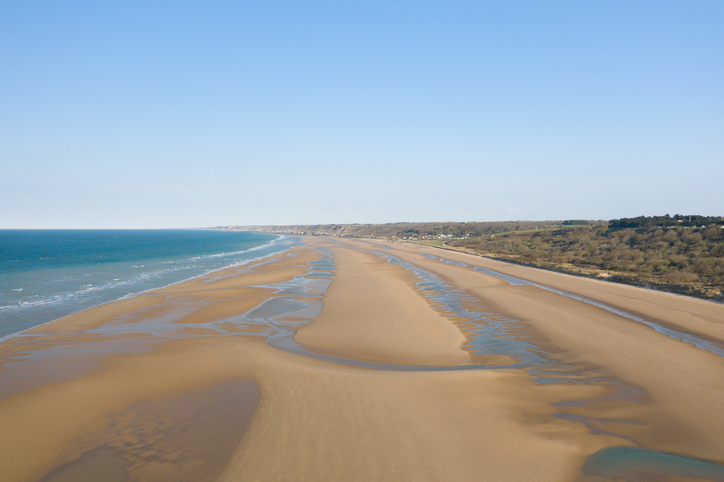
Normandy, France, is one of those places. I am currently reading D-Day by Stephen Ambrose. There is a great chapter about why Normandy was chosen.
They needed to land far enough away from Germany that any response from them (by air or by land) would stretch their supply lines, and thus, leave them open to the severe consequences of our air superiority. We had to have a port which could be opened by fighting from land units. We needed room to land divisions side-by-side. We needed to be sure that the width of the channel was not too wide. Our fighters needed to by able to fly close air support. We couldn’t choose the most obvious crossing as the Germans were already well situated to defend it – Calais. The problem with Calais, in addition to the Germans knowing it was an obvious crossing option, is that it allowed for a rapid response from Germany as it was far closer to their core units found in Germany proper. US war planners chose an area 180 miles ESE of Calais.
Planners had to consider tides, weather, and phases of the moon. The first window was cancelled as the first of several storms in the cycle closed the English Channel. With the Channel still churning after the first storm passed, our men got the green light to go. They departed England, and headed for France in order to establish a foothold in Europe which would force Hitler to fight a two front battle. And the rest is history.
I thought maybe the following hymn was an appropriate way to honor service men who fought that day. This hymn was written for We Were Soldiers and was played at Ronald Reagan’s funeral services in 2004. But you know, it kind of hits the right tone for those young men who ran up those beaches on June 6, 1944.
So, I end w/ two video clips. One is the “Mansions of the Lord” performed by the West Point Band and West Point Glee Club(2017). The second is a prayer for our soldiers on D-Day in Franklin D Roosevelt’s own words.
Where no mothers cry,
And no children weep,
We shall stand and guard while the angels sleep,
All through the ages safely keep,
The Mansions of the Lord.
Words by Randall Wallace; music of Nick Glennie-Smith (2002)
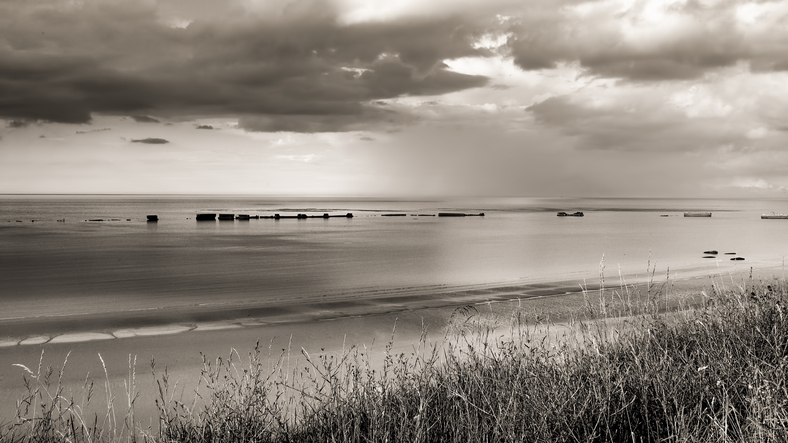
Licensed thumbnail photo of Normandy by propero_beach
Discover more from Rob's Innovation in Education Blog
Subscribe to get the latest posts sent to your email.